

I have devoted years playing, studying, and writing about blackjack, and few things have deepened my understanding of blackjack as much as watching a lobby overflow with dozens of subtly different tables. At casino gravira I set out to hand-pick variants that do not just multiply the same formula but genuinely change how you weigh risk, handle your bankroll, and feel the rhythm of a shoe. When you click into our table games section you are stepping past a single-game menu and into a full library where classic rules, live-dealer streams, side-bet inventions and mobile-first design all live side by side. Grasping how these variants actually work—what the extra options set you back, where the house edge creeps in, and which tweaks benefit a more confident player—is the reason this page was created. I am going to walk you through the mechanics that count, the decisions that carry the most weight, and how everything from payment speed to bonus eligibility fits around the blackjack experience we have built here.
The fundamental rules That Govern Every Blackjack Variant
Before any side bet or visual theme gets added, a blackjack variant is shaped by a handful of mechanical decisions that alter the odds. I always start with the dealer’s rule on soft 17. In a hit-soft-17 game the dealer must draw on hands like Ace-6, which pushes the house edge up by about 0.22% compared with a stand-soft-17 table—a small shift that compounds over hundreds of hands. Next I check the number of decks; a six-deck shoe with standard rules yields a house edge near 0.5% for a basic-strategy player, while the same game dealt from a single deck can dip below 0.2% if the paytable stays at 3:2. That paytable is non-negotiable for me. When a table pays 6:5 for a natural, the house edge roughly increases threefold compared with the classic 3:2, and I steer serious players toward the full-pay tables every time.
Doubling and splitting possibilities are the next layer. I look for whether doubling is allowed on any two cards or restricted to hard totals of 9, 10 and 11, and whether doubling after a split is permitted. A game that lets me double after splitting a pair of Ace pairs—even if the house only gives one more card on each split Ace—gives me back around 0.14% in expected return compared with a no-double-after-split regulation. Surrender, especially late surrender, is another edge-softening mechanism. When I can surrender a hard 16 against a dealer 9, 10 or Ace I reduce the long-term cost of those uncomfortable spots. At Gravira Casino I have made sure these core rule flags are visible in the game previews so you do not need to guess whether a table plays hard or soft. These fundamentals are the DNA of every variant that follows, and I treat them as a checklist before I place a single bet.
The Live Dealer Advantage: Delivering Real Tables to Your Screen
Real-time blackjack is where the variant conversation stops being theoretical and becomes tactile. When I load one of the broadcasts at Gravira Casino I am watching a trained dealer work a real shoe in a broadcast studio, often with various camera angles, a chat box, and a visible discard tray. The variant I choose—whether it is a classic seven-seat table, Speed Blackjack where the player who acts fastest gets the next card, or a Lightning round that zaps random multipliers onto certain hand results—directly affects the physical cadence. In Lightning Blackjack, for instance, the multiplier can increase a winning natural from 3:2 up to 25x, but the mandatory multiplier fee means the base return falls without the bonus, so I modify my bet sizing accordingly. I discover that live-dealer tables almost always use the hole-card American rule set with stand-on-soft-17 and late surrender, which keeps the strategic backbone familiar while the environment feels completely fresh.
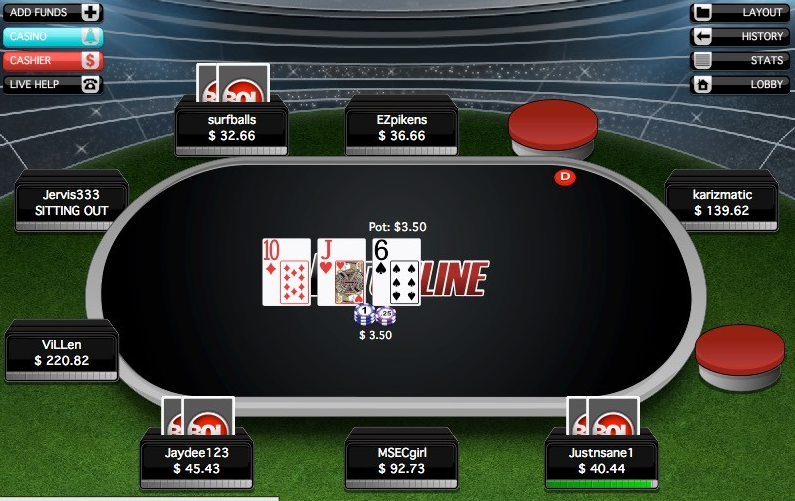

The betting limits are another element I always examine. At Gravira’s live blackjack tables I can access low-stakes seats that start around a dollar and high-roller lobbies where maximums climb into the thousands, often with dedicated VIP dealers. I encourage new live players to start by watching a few rounds without a seat; the observation time lets me grasp the pace, the dealer’s rhythm, and any variant-specific pop-ups like Bet Behind, where I can play on another player’s hand while waiting for a spot. That feature alone doubles my engagement when tables are busy. Because the whole experience runs on the same Gravira account, deposits and withdrawals are instantly available mid-session, and the same bonus balance that works on RNG blackjack—provided the contribution weight is satisfied—carries over to the live lobby. For me, live blackjack is the ultimate expression of the variant, and it is the part of our game library I revisit most often when I want a genuine casino floor feel without the travel.
Multiple-Hand and Several-Deck Variations Available Today
A quick scroll through the Gravira Casino table-game section will show that the standard single-hand, six-deck shoe is only the start. Multi-hand blackjack enables me to play up to five hands simultaneously against the common dealer upcard, which is a powerful tool for reducing variance—if one hand busts the remaining can still push or win, and the session feels less like a stop-start sequence. I also notice several deck setups that go beyond the typical eight-deck ceiling; some titanium-deck variants use continuous-shuffling devices that virtually eliminate deck-penetration factors while keeping the game moving at a lively pace. Then there are hybrid titles like Atlantic City Blackjack, which stacks player-friendly rules—late surrender, double any two, double after split, dealer stands on soft 17—on an eight-deck shoe, creating a house edge that stands comfortably below 0.4% when I follow basic strategy. Each of these appears in the Gravira collection alongside more niche picks like Double Attack Blackjack, where the dealer exposes his upcard before any betting choices begin, changing the entire opening-move dynamic.
The way Side Bets Change the Game’s Tempo and Approach
Side bets act as the seasoning that can turn a disciplined grinding session into something far more swingy, and I have learned to treat them as a separate entertainment budget rather than a way to beat the main game. The most common option on our tables is Perfect Pairs, which pays the first two cards being a mixed, coloured or identical pair. A genuine perfect pair—same rank and suit—typically returns 25:1, which sounds appealing until you check the house edge, often between 2% and 6% depending on deck count. The bet pays out on the initial deal only, so it adds zero skill and pure anticipation to the opening moment. Right next to it I often find 21+3, a side bet that combines the player’s first two cards and the dealer’s upcard into a three-card poker hand. Hitting a straight flush pays out 40:1, but the edge stands around 3-4% in a six-deck shoe, meaning I expect to lose that wager three to four times faster than my main bet over a long session.
More recent offerings like Bust It, where you wager that the dealer will go bust with a specific card count, and Lucky Ladies, which depends on a total of 20, create entirely different payout ladders. I occasionally drop a small side-bet chip when I want a jolt of excitement, but I never raise my main bet to cover it—a common mistake I see players make when the main count is running favourably. At Gravira Casino I appreciate that the table rules clearly display side-bet payoff odds and house-edge estimates inside the info panel, so I can decide before the shoe starts whether I am playing for a slow grind or a loud win. When I view side bets as optional spice, they make the session more entertaining without hollowing out the bankroll. The trick is remembering that no basic-strategy card tells you when to play them; that decision lies purely in your own risk appetite.
European versus American Blackjack: Two Paths, One Goal
The difference between European and American blackjack does not relate to geography—it concerns the dealer’s hole card. In American blackjack the dealer receives one face-up card and one face-down card, and the dealer peeks for blackjack when her upcard is a Ten, Ace or picture. That peek protects your split and double-down chips immediately; if the dealer has blackjack the hand ends right there. European blackjack, on the other hand, gives the dealer only one card at the start and does not draw the second card until all players have acted. Because the dealer does not check for blackjack early, doubling or splitting into a dealer natural means losing the extra wager without even seeing a turn card. That structural difference alone shifts the correct basic-strategy edge slightly, and it is the reason I mentally recalibrate when I switch from a Vegas-style table to a classic European one.
Beyond the hole-card rule, the European tables we carry at Gravira Casino often fold in no-peek logic with other rule variations—like restricting doubling to hard 9, 10 and 11 or offering late surrender as compensation. I tend to use surrender more aggressively in European variants precisely because the risk of busting against an unseen dealer hand is more elevated. What I appreciate about having both styles in one lobby is the way it forces me to stay sharp; the same hand of 11 against a dealer 10 asks for a different nerve if I know the dealer’s second card is still in the shoe. Newer players sometimes assume the two names just describe a visual skin, but the hole-card detail changes bankroll management on choppy shoes. I see this pair of styles as the two root systems, and everything else—Atlantic City, Spanish, Switch—branches from them. Once you internalize the hole-card logic, the more exotic labels become much easier to deconstruct.
On-the-go Blackjack: Optimized Play on the Go
I handle the bulk of my blackjack play on a phone, so I am particular about how a casino’s tables transfer to a smaller screen. At Gravira Casino the blackjack lobby is built on responsive HTML5, meaning I can access the same game from the same browser on a laptop, tablet or smartphone with no download. What I look for first is whether the tap targets for hit, stand, double and split are large enough that I rarely misclick when the timer is ticking; our tables use a clean two-thumb layout where the action buttons sit at the bottom of the screen and the chips and bet selector stay within easy reach. The graphic quality scales based on connection speed, so even on a mobile network the cards remain crisp and the shoe animation smooth. More importantly, every variant that is available on desktop—multihand, side bets, live streams—is present on mobile, which is not something every platform can claim.
Financial systems, Bonuses, and Integrity: What Counts Past the Cards
Even the best blackjack version becomes pointless if I am unable to transfer money in and out with assurance or if the bonus conditions work against table-game enthusiasts. At Gravira Casino the banking section is built for Canadian users: Interac e-Transfer and Instadebit let me transfer money directly from my bank account in seconds, while MuchBetter and ecoPayz offer me an e-wallet path for faster withdrawals. Typical processing times for a cashout transaction sit at around 24 hours for e-wallets once my account is verified, and Interac transfers often land within one to three business days. I always confirm my identity early to avoid delays later, and the cashier page clearly indicates minimum and maximum transaction limits without making me search through a terms-of-use wall. The platform operates under a respected gaming licence—you can find our full credential information in the site footer—and the random-number generators that run the RNG blackjack tables are tested by independent third-party laboratories. That combination of Interac-speed banking, clear bonus-contribution rules for blackjack (typically a fraction of the rough-weight given to slots) and transparent licensing is, in my view, the cornerstone that allows me center on the game instead of administrative noise. When I sit down at a blackjack table here I know exactly what I am getting: a fair game, fair banking, and a casino that treats table-game play as a first-class citizen, not an afterthought.
After all the rule comparisons and variant breakdowns, the single most profitable step I can do is the one that happens before I ever look at a card—choosing a table where the core calculations, the mobile delivery and the cashier system are all aligned in my favour. At Gravira Casino that alignment is intentional. I built the blackjack area so you can toggle between hole-card styles, experiment with a side-bet novelty with a couple of dollars, or sink into a live spot with a dealer whose name you remember, all while the Interac rails carry your funds quietly in the background. The next time you launch the lobby, select a variant you have not tried—maybe the one with the late-surrender toggle you were curious about—and view it as a laboratory. Bring basic strategy, bring a fixed session budget, and let the variant demonstrate you what it does differently. That is how you quit simply playing blackjack and begin understanding it.